To show and hide the modal for editing purposes on Tablet:
- Select the filters2_filters-wrapper inside the parent div filters2_layout div.
- Hit the Hide button and it will show (yes this is counterintuitive).

Charging Stations for Businesses
Charging stations for businesses in Flanders almost always run into the same obstacle: the grid connection. Frax supplies installers with 7- and 11-kW AC charging stations, 30- to 480-kW DC fast chargers, and the EVMS-ONE—a fast charger with a built-in battery ranging from 261 to 520 kWh that can charge even when the connection is underrated for the load.


Filters
Optional products
Optional products
Battery storage systems


No results found.
There are no results with this search criteria. Try other search terms.
That's why installers trust Frax!
We take care of the groundwork: every system is fully prepared before it leaves our facility, so all you have to do on-site is install and connect it. If you run into any issues with system selection or inspection, our team will handle it. After delivery, you can use the included software to monitor the reliability of each system.
Which charging stations are suitable for businesses?
The charging capacity determines the type of charging station and the impact on the electrical connection. We categorize companies’ needs into three scenarios.
1. Staff and visitors: 7- and 11-kW AC charging stations
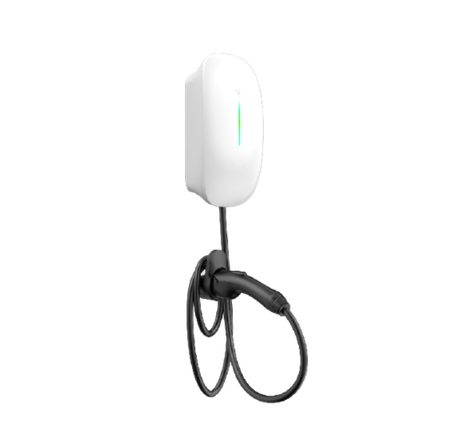
An employee who spends eight hours in the parking lot doesn't need a fast charger. The Caro Series wallbox from SAJ delivers 7 kW (single-phase) or 11 kW (three-phase) and adds 50 to 80 kWh over the course of a workday—well more than the daily consumption of a company car. The wallbox prioritizes surplus PV power, so it charges using the building’s own solar power when production allows. This is the charging station for your clients’ offices, practices, and residential projects.
2. Short Stops and Fleet: DC fast chargers ranging from 30 to 480 kW
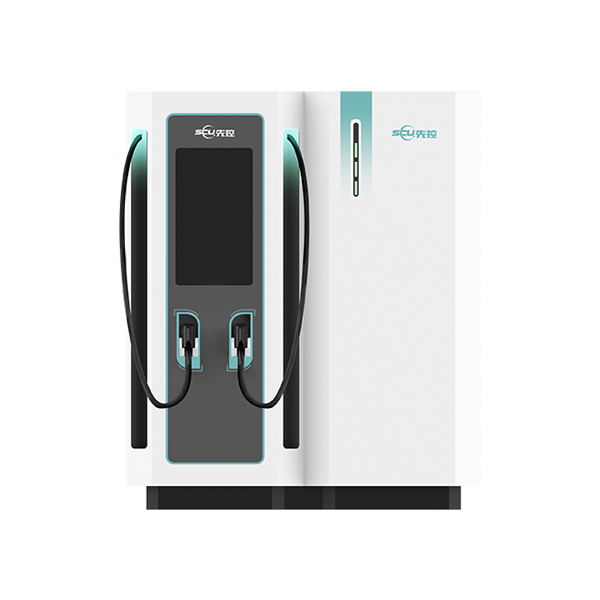
Delivery vans returning in the afternoon, taxis, car-sharing vehicles, and visitors who stay for 20 minutes: all of these require direct current. Frax supplies three DC chargers from SCU, all equipped with CCS2:
- EVMS-30: 30 kW, single gun, compact, for a single charging point on a limited connection. Charges about 150 km per hour.
- EVMS-80 to 200: dual-gun, modular design consisting of power modules; charges two vehicles simultaneously and dynamically allocates the available power.
- EVMS-240 to 480: dual gun for loading areas, logistics hubs, and transport corridors; capacity can be expanded by adding modules.
The modular design is the selling point for your customer: they start with 80 kW on their current connection and add modules as soon as the grid study or a grid upgrade allows for more power.
3. Connection too loose: the EVMS-ONE with battery
The EVMS-ONE combines a 120- to 240-kW DC fast charger with a 261- to 520-kWh LFP battery in a single enclosure. The battery recharges slowly via the existing connection and delivers the charging power to the vehicles in short sessions. A transportation company with a 100 kVA connection can thus still charge three trucks per day without waiting for Fluvius. For larger charging stations, you can apply the same logic to a battery container.
How much power does a charging station need?
The charging capacity of a charging station ranges from 3.7 kW to 480 kW; the appropriate value depends on the vehicles' charging time.
- Single-phase AC: 3.7 to 7.4 kW, charging at 20 to 40 km per hour.
- Three-phase AC: 11 to 22 kW, charging at 60 to 100 km per hour.
- DC fast charger: 30 to 480 kW, charging up to 400 km per hour for vehicles capable of handling that power.
A car that’s parked for eight hours receives 11 kW. A car that’s parked for 30 minutes receives 150 kW or more. In between, the greatest gains come from smart control, not from more power.
Load management: Smartly allocating available power
Ten 22-kW charging stations draw a combined total of 220 kW. Most small and medium-sized businesses have a 63- to 160-A connection, which would then be maxed out all at once. Dynamic load management measures the building’s power consumption at the main connection and distributes the remaining power among the charging points. When cars are added, the power per charging point decreases; when one leaves, it increases again. This allows you to install a full charging station using the existing connection without overloading it.
The second layer is the energy management system. It connects the charging stations to the solar panels and the customer’s battery: charging using the customer’s own solar power when there is a surplus, charging from the battery during peak hours, and drawing power from the grid when the price is low. Since the capacity rate was introduced, every quarter-hour counts: a charging station that starts charging uncontrolled at 5 p.m. sets the monthly peak for the entire company.
What are the rules for charging stations at businesses in Flanders?
Three rules govern the design of charging infrastructure for non-residential buildings.
- New construction and major renovations with more than 10 parking spaces: at least 2 charging points must be operational, and 1 in 4 parking spaces must be pre-wired. Pre-wiring during the structural phase costs a fraction of what the groundwork would cost later; cabling is the largest expense in a retrofit.
- Existing non-residential buildings with more than 20 parking spaces: at least 2 charging stations as of January 1, 2025.
- Installation and inspection: A licensed electrician installs the charging station in accordance with AREI standards; a certified inspection agency inspects the installation; and then you register the charging station with Fluvius.
The European EPBD-IV further tightens the pre-cabling requirement starting in 2026; we are monitoring its implementation in Flemish regulations and adapting the design of the charging infrastructure accordingly.
How much does a charging station cost for a business?
The investment depends on the power capacity, the cabling, and the control system. Here are three approximate figures from our projects, excluding VAT:
- 11-kW AC wallbox, installed and inspected: 1,500 to 2,500 euros per charging point.
- Charging station with 10 AC charging points, including load management and cabling: 15,000 to 40,000 euros, with the cost of groundwork accounting for the difference.
- DC fast chargers starting at 30 kW: starting at 15,000 euros per charging point, with prices increasing based on power output and grid connection.
Tax-related: The increased expense deduction for publicly accessible smart charging stations (200%, then 150%) expired on August 31, 2024. Since then, the standard depreciation rules for corporations have applied; a charging station therefore remains deductible, but without the increased deduction. We do not list fixed prices for the SCU chargers on this page; we provide those on a project-by-project basis in a quote.
Public charging as a source of revenue
A charging station in a company parking lot sits idle in the evenings and on weekends. If you open the charging stations to the public via a CPO platform, the customer earns revenue from every charging session by non-employees, and the utilization rate increases. Publicly accessible charging infrastructure requires payment via a charging card or app, a kWh-calibrated meter per charging point, and a clearly displayed rate. The SCU chargers support OCPP and integrate with the standard Belgian CPO platforms; we coordinate the configuration with the platform prior to delivery.
Charging Stations and Solar Panels: A Winning Combination
On a sunny day, a business with a 100 kWp rooftop system feeds tens of kWh into the grid at a low or negative price. A charging station with ten cars draws that same energy. With PV control, the wallbox charges using the surplus; with a battery in between, the customer can also charge in the evening using their own solar power. You control those three components—solar panels, battery, and charging stations—from a single EMS. An indoor battery system or a battery cabinet from Frax connects directly to it.
Want to have a charging infrastructure designed?
Please send us the number of parking spaces, the vehicles’ parking duration, and your customer’s electrical connection. We’ll create the charging plan, determine the specifications for the charging stations and any batteries, and prepare the grid study and the Fluvius application. Contact us for a quote or browse the charging stations in our online store.
Frequently Asked Questions
Can I store my excess solar energy for the winter?
No. Batteries provide power for hours to days, not seasons; seasonal storage requires conversion to, for example, hydrogen or heat. However, the containers do help even out the difference between day and night, so that solar energy generated during the day remains available at night.
Does a home battery still make sense?
Yes. Households use home batteries to store excess solar energy for the evening, and with the end of the net metering program in the Netherlands in 2027, this will become more attractive; solar panels will then only generate revenue if you consume or store the electricity yourself. For residential use, the units are in kWh; the containers on this page are in the MWh class for businesses.
How long can you store energy in a home battery?
Technically, it can last for weeks, but from an economic standpoint, it makes more sense to use the energy within one to a few days. Every battery loses a small percentage of its charge each month due to self-discharge; cycling it quickly is more beneficial than storing it for a long time.
How can I keep my container dry?
The battery container's climate control system takes care of that. Air conditioning and forced ventilation keep the temperature and humidity within the specified range, preventing condensation from forming on the cells and electronics.
What is the cheapest way to store energy?
On a per-kWh basis, a large battery container is currently the cheapest electricity storage option: the larger the energy storage systems, the lower the cost per unit of storage. Alternatives such as hydrogen are more expensive per kWh, but they can store large amounts of energy across seasons.
What types of energy storage are there?
Electricity can be stored in batteries (ranging from home batteries to battery containers), in hydroelectric power via reservoirs, in heat via buffer tanks, and in hydrogen via electrolysis. Batteries—and therefore battery containers as well—are gaining ground because they can supply power immediately and can be installed anywhere, from basements to pastures; electricity from a reservoir or hydrogen power plant takes longer to become available.
How much does an energy storage system cost?
That depends on the capacity, power, and customization; for energy storage systems in the MWh range, we therefore do not list standard prices. Request a quote tailored to your situation.
What are the storage costs for a container?
Calculate the Levelized Cost of Storage for a battery container: the total cost of the system divided by the total kWh it stores over its lifetime. The more cycles and the greater the capacity, the lower the result; large-scale storage therefore almost always outperforms small-scale storage. Thanks to LFP’s long lifespan and 6,000+ cycles, these containers fare well in this comparison; the exact value varies by project.
Table of contents
Bob & Jimmy
Founders of Frax
With more than ten years of experience in the energy market, we founded Frax together in 2023. We both developed a passion for sustainable energy and innovation. Jimmy has been active in the world of renewable energy since 2008, from installing solar panels to becoming an expert in smart energy technologies, while Bob gained years of experience in the broader energy market.
Together, we support installers and companies with smart, plug-and-play battery storage systems, control solutions, and innovative technologies that truly optimize energy management. We believe that simple and reliable solutions are the key to a future with more efficient energy use.