To show and hide the modal for editing purposes on Tablet:
- Select the filters2_filters-wrapper inside the parent div filters2_layout div.
- Hit the Hide button and it will show (yes this is counterintuitive).

Inverters for Battery Storage
A battery storage inverter is a bidirectional Power Conversion System (PCS): it charges the battery from the grid or solar panels and feeds power back into the grid later. Frax supplies installers with PCS units ranging from 29.9 kW to 1,725 kW, preconfigured for the battery and the EMS with which they work.


Filters

Optional products
Optional products
Optional products
Optional products
Optional products

Optional products

Optional products

Optional products
No results found.
There are no results with this search criteria. Try other search terms.
That's why installers trust Frax!
We take care of the groundwork: every system is fully prepared before it leaves our facility, so all you have to do on-site is install and connect it. If you run into any issues with system selection or inspection, our team will handle it. After delivery, you can use the included software to monitor the reliability of each system.
What does an inverter do in a battery system?
An inverter converts the direct current (DC) from the battery into alternating current (AC) for the grid and the loads, and in the opposite direction, it charges the battery. In battery storage systems, this inverter is called a PCS: a bidirectional inverter without an MPPT tracker, which has four operating modes: grid-tied discharge, grid-tied charge, off-grid discharge, and PV control via an external DC-DC converter.
That is the key difference from the inverter in a solar panel system. A string inverter, microinverter, or power optimizer operates in one direction and tracks the panels’ maximum power point; the choice is determined by shading and the roof’s orientation. A PCS operates in both directions and follows the setpoint of the energy management system: charge or discharge a specific number of kW during this 15-minute period. The battery inverter thus determines the system’s power output, while the battery modules determine its capacity. If you’re looking for an inverter to control solar panels, that’s something to discuss with your PV installer; this page lists only inverters for battery systems.
Our product line in three power classes
Frax offers three classes of battery inverters. Each class corresponds to a storage format in our product line; the inverter’s DC voltage and the battery rack’s voltage are pre-matched.
1. Modular, starting at 29.9 kW: Sinexcel PWS2-29P-EX
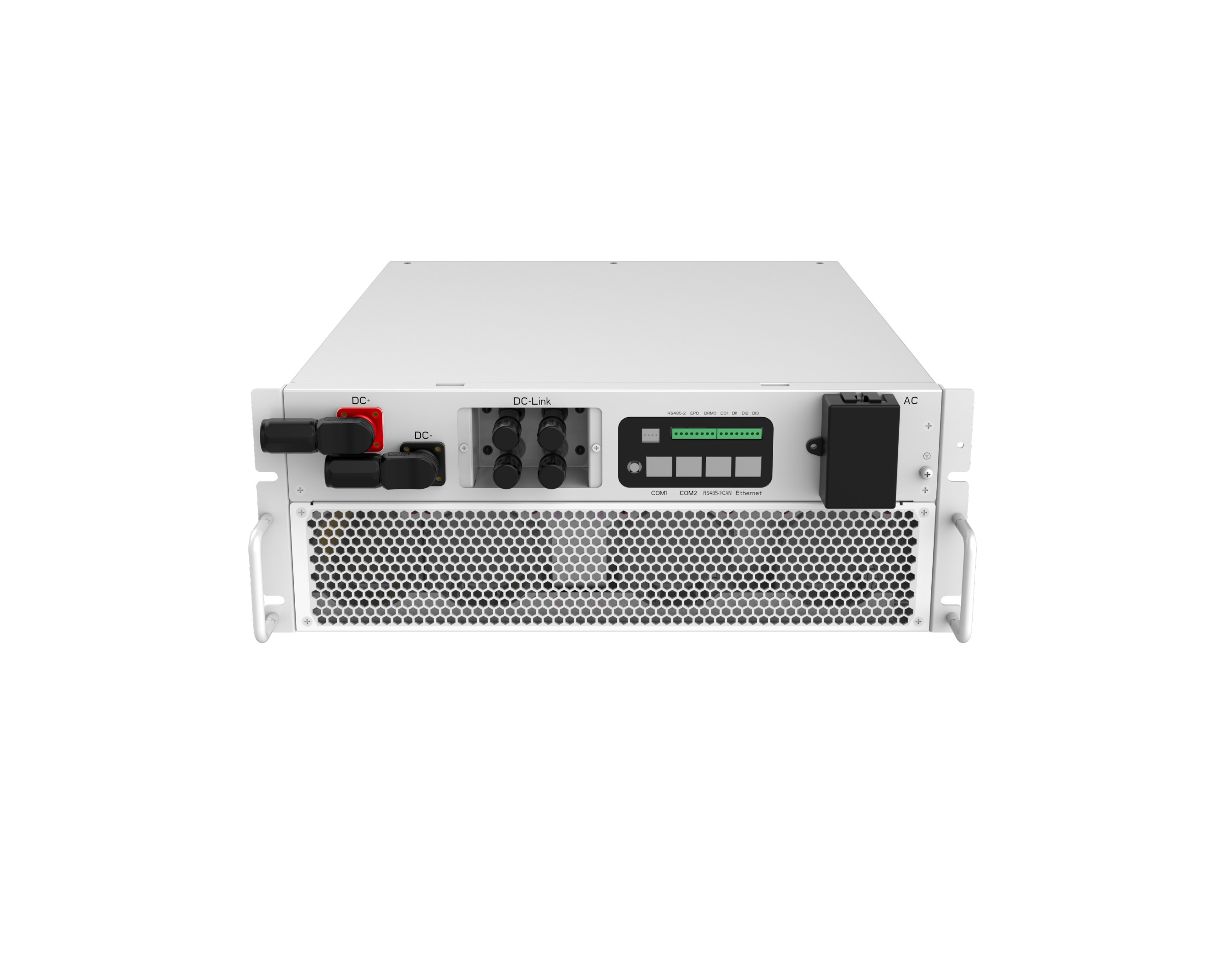
The PWS2-29P-EX is a 29.9 kW modular PCS with a DC voltage range of 350 to 750 V and an AC input of 400 V (±15%). The module is designed for indoor installation and operates in parallel: multiple units share a single grid connection and a single EMS signal. This inverter is included as standard in our indoor XLS system with 61.57 kWh of Pylontech modules.
2. Cabinet class 100 to 125 kW: In-Power INPPCS
The INPPCS-100 (100 kW, DC 630 to 900 V) and the INPPCS-125 (125 kW, DC 630 to 950 V) are bidirectional inverters for battery cabinets ranging from 100 to 520 kWh. The wide DC voltage range is compatible with high-voltage rails, keeping the current on the DC side low and minimizing cable cross-section. We combine these PCS units with the cabinet battery systems from our product line.
3. Container class 500 to 1,725 kW: Sinexcel PWS1
The PWS1-500KTL and the PWS1-1725KTL are central inverters for the MWh class, with a DC range of 600 to 900 V and flexible configuration options for each project. A battery container typically uses a PWS1-500KTL; the 1,725 kW variant is used in parks with multiple containers or for grid services where power is delivered within minutes.
How many kW of inverter do you need?
The inverter’s power rating depends on the application, not on the battery’s capacity. Use the C-factor in your calculations: a 100-kW inverter connected to a 200-kWh battery results in a C-factor of 0.5 and discharges the battery in two hours. Three rules of thumb from our projects:
- Peak shaving: The inverter capacity must be at least equal to the peak that exceeds the connected load. A company with a 250 kVA connection and a 15-minute peak of 330 kW requires at least 80 kW of PCS; we would then size it at 100 kW.
- Self-consumption and trading: a C-factor of 0.5 is sufficient; capacity is more important here than power.
- Emergency power: The inverter supplies the total power required by the critical loads, including the starting current of motors and compressors.
If you're unsure about the ratio, please send us the customer's 15-minute profile. We'll calculate the power and capacity and include the sizing details with the quote.
Which inverters are approved in Belgium?
In Belgium, you may only connect inverters that appear on the Synergrid C10/26 list. This list includes inverters that comply with technical regulation C10/11 for decentralized generation units, including batteries. We supply the PCS units in our product line with the corresponding certificates for the application file with Fluvius. Two practical limitations:
- For installations up to 10 kVA per connection, you must register the installation with Fluvius after the AREI inspection.
- For capacities above 10 kVA, you must request a grid study in advance; Fluvius will then assess whether the grid can handle the power injection and consumption.
All battery inverters listed on this page have a power rating above that limit. We prepare the grid study, provide the single-line diagrams, and oversee the inspection by a certified inspection agency.
EMS Control and Communication
A PCS does nothing on its own. The energy management system transmits a setpoint every 15 minutes via Modbus TCP, RS485, or Ethernet; the inverter executes it, and the battery rack’s BMS monitors the cells. Frax preconfigures the three layers to work together: the address range, register map, and charge and discharge limits are set before the inverter leaves the factory. On-site, you connect the communication cable and verify the handshake in the software.
DC Connection of Solar Panels
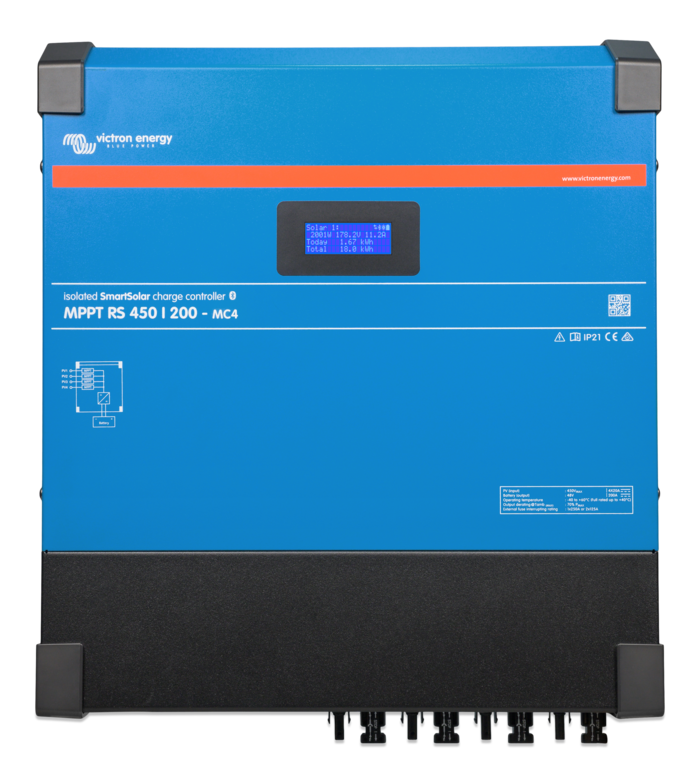
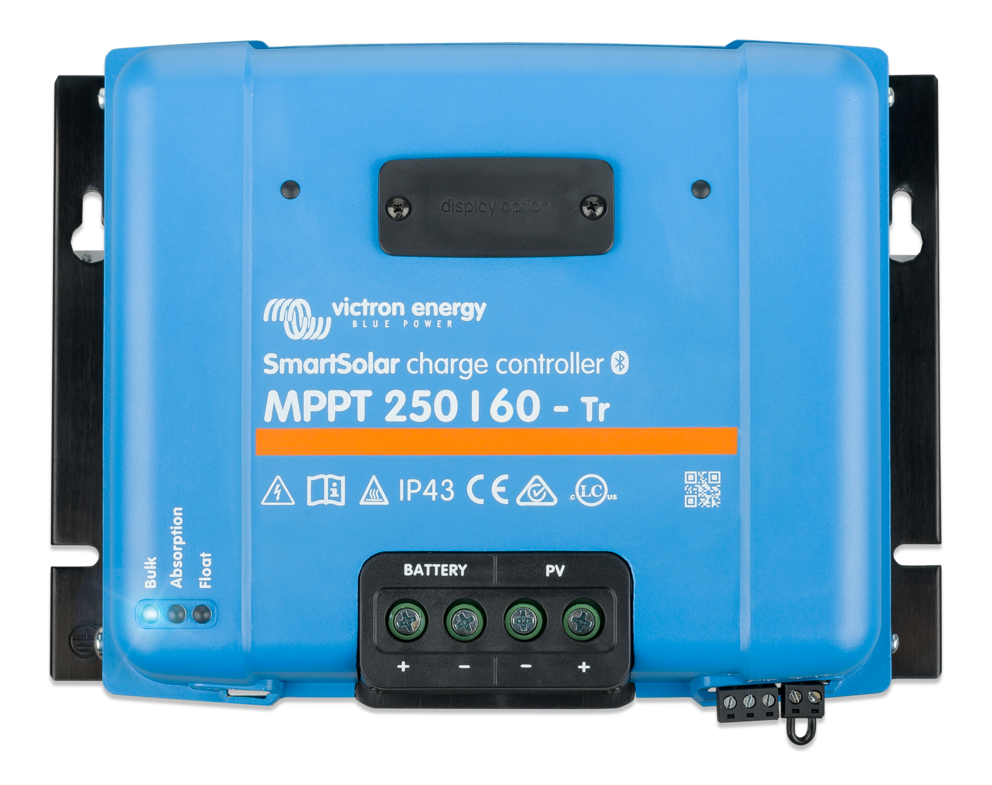
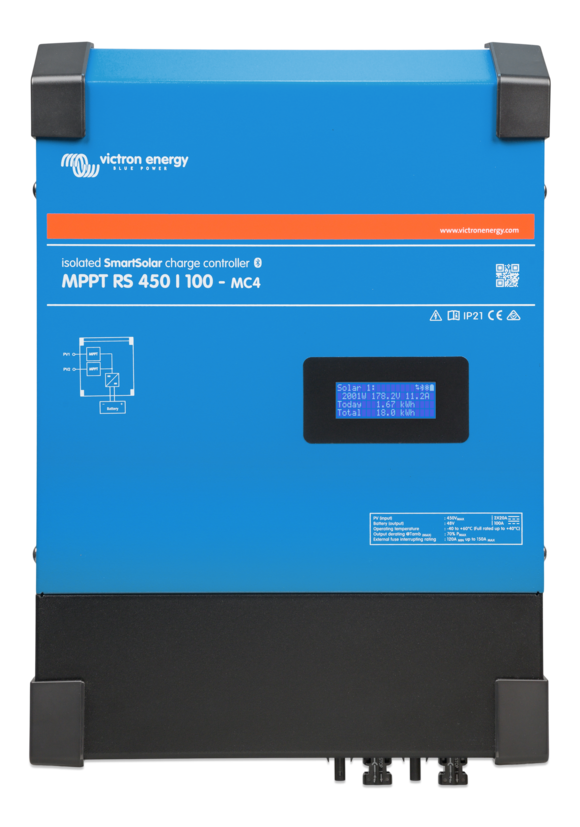
A PCS does not have an MPPT input. If you want to connect solar panels directly to the battery’s DC bus, you’ll need to add a DC-DC converter. For our Victron-based indoor M-series, we offer the DC generation packs with capacities of 3.4, 5.76, and 11.52 kWp: a SmartSolar MPPT (250/60, RS 450/100, or RS 450/200), the connection components for the Cerbo, and 2 meters of pre-wired cable. DC coupling eliminates one conversion step compared to AC coupling, resulting in an overall efficiency from PV to battery that is several percentage points higher.
If you're looking for a hybrid inverter with built-in MPPT for homes and small businesses, check out the SAJ all-in-one systems.
Where is the inverter located, and what does it need?
The PWS2-29P-EX and INPPCS units are installed indoors, in a low-dust, well-ventilated area with temperatures between -20 and 45 °C, with 200 mm of clearance around the ventilation openings; a utility room or warehouse is suitable, but an attic under a flat roof usually is not. The PWS1 container inverters are housed in the PCS compartment of the container, which has its own climate control system. Heat is the most important factor affecting service life: at ambient temperatures above 45 °C, a PCS derates its power output, and an inverter that is chronically overheated will lose its capacitors years earlier than expected. Expect a service life of 10 to 15 years for the inverter, compared to 15 to 20 years for the LFP battery; therefore, in the business case, you should plan for one replacement of the PCS within the battery system’s service life.
On the cable side, the rule is: the higher the DC voltage, the smaller the cross-sectional area. An INPPCS-100 operating at 800 V DC draws 125 A; the same 100 kW unit on a 48 V system would require well over 2,000 A. That is why all PCS units in our product line operate on high-voltage tracks, and we supply the DC cables cut to length.
Need help sizing an inverter and battery?
Send us your customer’s quarterly profile or annual bill. We’ll calculate the power, capacity, and C-factor, select the appropriate PCS, and provide the grid study and C10/26 certificates. Contact us or request a quote; existing customers can order the inverters directly from the online store.
Frequently Asked Questions About Battery Inverters
The questions installers ask us most often about battery inverters and PCS units.
A hybrid inverter combines an MPPT tracker, battery charger, and grid-tied inverter into a single unit, with a capacity of up to about 12 kW per phase. A PCS is solely the bidirectional battery inverter, starting at approximately 30 kW, and leaves PV control to separate DC-DC converters or a standalone PV inverter on the AC side. Above 30 kW, the PCS configuration is the standard.
Yes. The PWS2-29P-EX is clustered via a shared network behind a single distribution unit; the INPPCS and PWS1 units are connected in parallel per battery cabinet or container. Each inverter is connected to its own battery rack on the DC side; the EMS distributes the setpoint across the units.
The inverters in our product line feature an off-grid discharge mode and generate their own voltage and frequency. For a seamless switchover in the event of a grid outage, combine the PCS with a static transfer switch; the SCU cabinets in our product line switch over within 10 ms when used with such an STS.
A bidirectional inverter achieves an efficiency of 97 to 98.5% per conversion step. The overall efficiency of a complete battery system, including the battery and auxiliary power consumption, ranges from 85 to 92%. The fewer the conversion steps, the higher the efficiency; DC-coupled PV therefore outperforms AC-coupled PV.
Bob & Jimmy
Founders of Frax
With more than ten years of experience in the energy market, we founded Frax together in 2023. We both developed a passion for sustainable energy and innovation. Jimmy has been active in the world of renewable energy since 2008, from installing solar panels to becoming an expert in smart energy technologies, while Bob gained years of experience in the broader energy market.
Together, we support installers and companies with smart, plug-and-play battery storage systems, control solutions, and innovative technologies that truly optimize energy management. We believe that simple and reliable solutions are the key to a future with more efficient energy use.