To show and hide the modal for editing purposes on Tablet:
- Select the filters2_filters-wrapper inside the parent div filters2_layout div.
- Hit the Hide button and it will show (yes this is counterintuitive).

Battery containers for large-scale energy storage
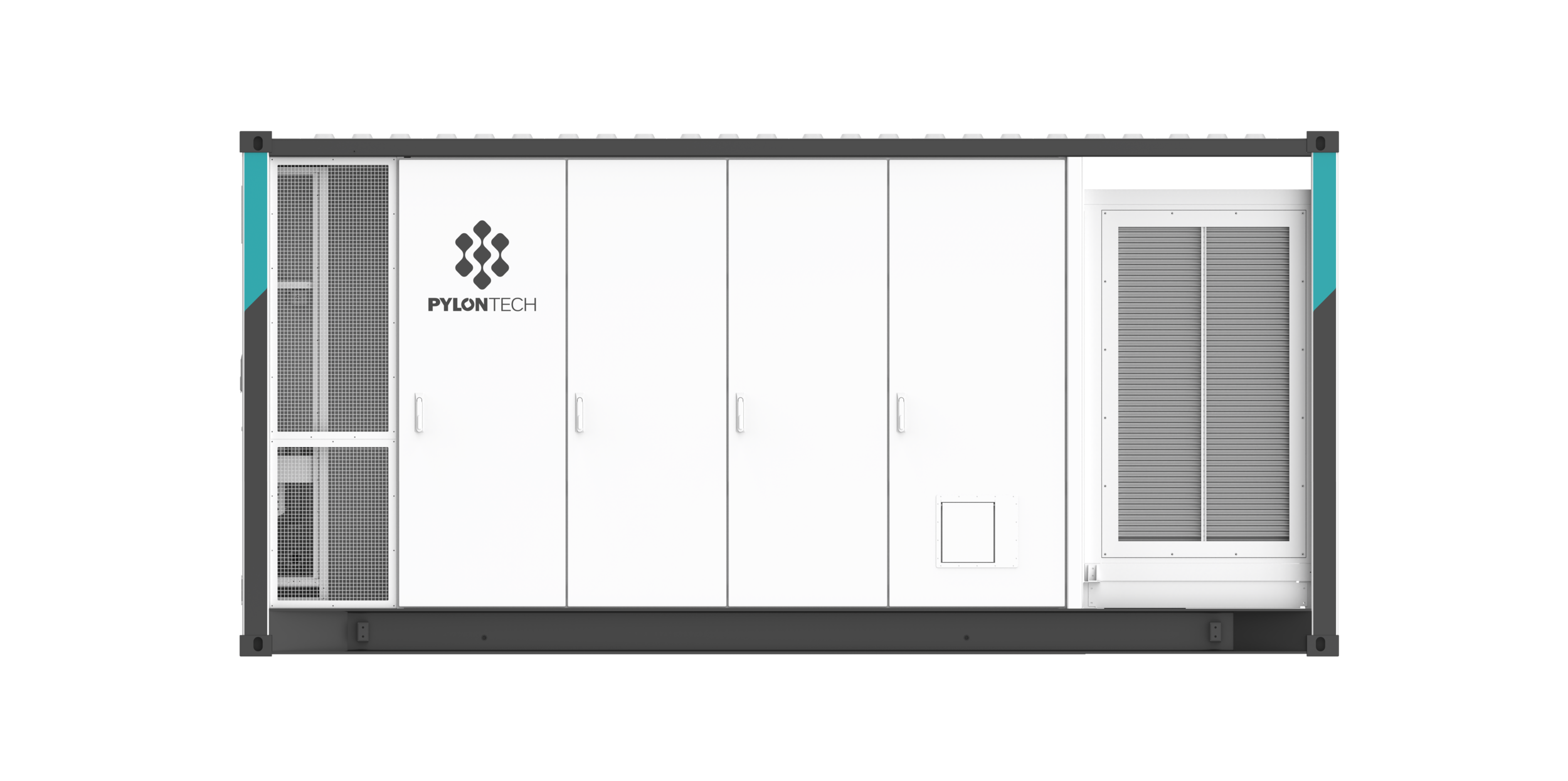
A battery container packs megawatt-hours of storage into a single 20- or 40-foot enclosure. Frax supplies energy storage containers ranging from 1 to 3.3 MWh, including engineering, transportation, and commissioning—unless the installer handles the commissioning themselves.


Filters


No results found.
There are no results with this search criteria. Try other search terms.
That's why installers trust Frax!
We take care of the groundwork: every system is fully prepared before it leaves our facility, so all you have to do on-site is install and connect it. If you run into any issues with system selection or inspection, our team will handle it. After delivery, you can use the included software to monitor the reliability of each system.
What is a container-based energy storage system?
An energy storage container system is a mobile battery solution built into an ISO container. The container houses battery modules, inverters that convert direct current into usable electricity, climate control, and a battery management system. Because the housing is a standard shipping container, these containers can be transported by truck, making them the most flexible energy storage solution for large-scale applications.
While a battery cabinet is limited to a few hundred kWh, battery containers start in the megawatt range. A battery container of this size stores large amounts of energy: enough to power a medium-sized business for hours or to buffer the energy generated by an entire solar farm.
How a battery container works
The battery management system monitors each cell; an energy management system controls the entire system and automatically regulates the charging and discharging processes. Purchase electricity when the price is low, store it, and use or sell the stored electricity during periods of high demand. In this way, energy storage systems reduce energy costs in two ways: by purchasing cheap electricity and avoiding expensive electricity.
When connected to solar panels or wind turbines, the containers store excess energy so that none of the solar energy generated is lost. Self-consumption of the energy generated on-site increases, and the strain on the power grid is reduced.
Modern energy storage systems achieve an efficiency of over 90 percent: for every ten kWh stored, roughly nine are returned. Energy management determines where those kWh go; using the energy management system, you can set—on a quarter-hourly basis—whether the containers are charging, discharging, or in standby mode.
Our containers: from 1 to 3.3 MWh
Frax's container lineup consists of three energy storage systems; we tailor the configuration of inverters and storage units to the specific needs of each location. Request the datasheet for each model via the product page.
A1000-OMNI
The A1000-OMNI delivers 1 MWh in a compact battery container and is the entry-level model for businesses that combine energy storage with a limited-capacity grid connection.
A2000-OMNI
The A2000-OMNI doubles the storage capacity to 2 MWh. This model is most commonly used for peak shaving in combination with trading via dynamic energy contracts.
L3300-OMNI
The L3300-OMNI , with a capacity of 3.3 MWh, is the largest battery container in the product line, designed for industrial applications and grid services that involve large amounts of energy per cycle.
A 20-foot or 40-foot battery container?
Battery containers are available in 20- and 40-foot versions; for smaller systems starting at approximately 500 kWh, a 10-foot version is also available. A 20-foot battery container fits on a standard truck and takes up little space on-site. The 40-foot containers offer more capacity and power per chassis and are the preferred choice when consumption or generation demands it.
The desired capacity determines the choice, along with the available space on-site and the flexibility required by the project. If you’re unsure, work backward from the application: peak shaving primarily requires power, while a solar farm requires maximum storage per square meter.
What is a battery container used for?
Six applications are the most common among our customers; many projects combine two or three of them, because the containers generate revenue year-round in various markets, whereas energy storage systems that do only one thing leave money on the table. Storage is most profitable when it switches roles frequently.
1. Peak shaving
The battery container absorbs peaks in energy consumption and keeps the load on the grid connection steady. This makes a difference in the contract with the grid operator, prevents penalties during periods of high demand, and directly reduces energy costs.
2. Grid Congestion and Grid Reinforcement
Once the grid is at capacity, businesses can no longer obtain a higher-capacity connection. With a battery container, you can expand without requiring grid upgrades: the battery container provides the power that the connection cannot handle; moreover, energy storage can be arranged more quickly than a grid upgrade process with the grid operator.
3. Trading through dynamic energy contracts
Energy storage systems generate revenue on the imbalance market and through dynamic energy contracts. The energy management system purchases electricity when prices are low and sells it when demand is high; this flexibility generates new revenue streams in addition to savings on energy costs.
4. Emergency Power Supply
In the event of a power outage, the container takes over critical processes; a battery-powered emergency power supply kicks in within milliseconds, whereas a generator takes seconds. For a hospital, data center, or cold storage facility, this backup power supply—which ensures a reliable power supply—is the reason to opt for large-scale energy storage.
5. The Agricultural Sector and Electric Vehicle Charging
Farmers use the containers to store the electricity generated by the solar panels on their barns for their own energy needs. Transportation companies use the same technology to charge electric trucks and other electric vehicles without overloading the grid.
6. Storing Renewable Energy
Solar and wind farms store the energy they generate in containers so they can sell it when the power grid needs it. This ensures that renewable energy remains available even when the sun isn’t shining or the wind isn’t blowing, and it increases the share of renewable sources in the energy mix.
Integration with Solar Panels and Wind Energy
For owners of solar panels on large roofs and for solar farms, the combination with energy storage is one of the fastest-growing applications. On sunny afternoons, electricity prices are low or even negative; by storing the solar panels’ output in the battery container during the day and selling it or using it themselves in the evening, the company runs on its own electricity as much as possible, and each panel generates more revenue.
Wind energy has the opposite profile: wind energy often peaks at night, when demand is low. The containers are there to store the excess energy; the stored energy is fed into the power grid as soon as demand and prices rise. In this way, energy storage systems make renewable energy from solar and wind more controllable, and that is exactly what the grid needs to become more sustainable.
Lifespan and Safety
A battery container lasts an average of 15 to 20 years; this makes these energy storage systems among the longest-lasting investments in the field. The LFP batteries in our containers—from manufacturers such as Pylontech and Conrad—can withstand well over 6,000 charge cycles; LFP also has a longer service life and a higher ignition temperature than other lithium chemistries.
Certification
The containers comply with CE, UL, TÜV, and ISO certifications; each battery container is also equipped with a dual fire suppression system. For the insurer and for environmental permitting purposes, the paperwork is often just as important as the technology; we provide the certificates upon request.
Climate Control
Air conditioning and ventilation keep the temperature inside the containers between 10 and 30 °C, even during a hot summer. This is necessary for optimal performance and keeps the container free of moisture; condensation is not an issue when the climate control system is working properly.
What determines the price of an energy storage system?
The price of an energy storage system depends on four factors: storage capacity in MWh, power output in MW, the grid connection, and the required custom engineering. Larger containers also lower the price per kWh stored. Companies therefore first select the application and only then choose the size; a battery container for peak shaving requires a different power-to-storage ratio than a battery container for energy trading.
For most projects, the payback period ranges from 5 to 10 years. For energy-intensive companies, the container is a strategic investment: it saves money, generates revenue, and provides protection all at once. We’ll work with you to determine how the container can benefit your specific situation, based on your energy consumption and contract type.
From Quote to Operational Battery Container
Frax guides you through the entire process: sizing the energy storage systems, transporting the containers, installation, connection, inspection, and energy management after commissioning. On the path to a more sustainable future, a container doesn’t have to be a leap of faith; check out our projects or request a quote tailored to your situation. If you’re looking for a storage solution that falls between a cabinet and a container, check out our large battery systems or battery cabinets.
Frequently Asked Questions
Can I store my excess solar energy for the winter?
No. Batteries provide power for hours to days, not seasons; seasonal storage requires conversion to, for example, hydrogen or heat. However, the containers do help even out the difference between day and night, so that solar energy generated during the day remains available at night.
Does a home battery still make sense?
Yes. Households use home batteries to store excess solar energy for the evening, and with the end of the net metering program in the Netherlands in 2027, this will become more attractive; solar panels will then only generate revenue if you consume or store the electricity yourself. For residential use, the units are in kWh; the containers on this page are in the MWh class for businesses.
How long can you store energy in a home battery?
Technically, it can last for weeks, but from an economic standpoint, it makes more sense to use the energy within one to a few days. Every battery loses a small percentage of its charge each month due to self-discharge; cycling it quickly is more beneficial than storing it for a long time.
How can I keep my container dry?
The battery container's climate control system takes care of that. Air conditioning and forced ventilation keep the temperature and humidity within the specified range, preventing condensation from forming on the cells and electronics.
What is the cheapest way to store energy?
On a per-kWh basis, a large battery container is currently the cheapest electricity storage option: the larger the energy storage systems, the lower the cost per unit of storage. Alternatives such as hydrogen are more expensive per kWh, but they can store large amounts of energy across seasons.
What types of energy storage are there?
Electricity can be stored in batteries (ranging from home batteries to battery containers), in hydroelectric power via reservoirs, in heat via buffer tanks, and in hydrogen via electrolysis. Batteries—and therefore battery containers as well—are gaining ground because they can supply power immediately and can be installed anywhere, from basements to pastures; electricity from a reservoir or hydrogen power plant takes longer to become available.
How much does an energy storage system cost?
That depends on the capacity, power, and customization; for energy storage systems in the MWh range, we therefore do not list standard prices. Request a quote tailored to your situation.
What are the storage costs for a container?
Calculate the Levelized Cost of Storage for a battery container: the total cost of the system divided by the total kWh it stores over its lifetime. The more cycles and the greater the capacity, the lower the result; large-scale storage therefore almost always outperforms small-scale storage. Thanks to LFP’s long lifespan and 6,000+ cycles, these containers fare well in this comparison; the exact value varies by project.
Table of contents
Bob & Jimmy
Founders of Frax
With more than ten years of experience in the energy market, we founded Frax together in 2023. We both developed a passion for sustainable energy and innovation. Jimmy has been active in the world of renewable energy since 2008, from installing solar panels to becoming an expert in smart energy technologies, while Bob gained years of experience in the broader energy market.
Together, we support installers and companies with smart, plug-and-play battery storage systems, control solutions, and innovative technologies that truly optimize energy management. We believe that simple and reliable solutions are the key to a future with more efficient energy use.