.jpg)

Battery storage, also known as energy storage, makes your energy supply more flexible and easier to manage. You store electricity locally and use it smartly when your building or operation needs it.
Why energy storage is becoming increasingly important for logistics real estate
The sector is rapidly becoming electrified. Charging stations are growing in number, internal logistics are increasingly electric, and buildings are becoming more energy efficient with heat pumps, smart installations, and advanced controls.
This development regularly clashes with the reality of the energy grid: grid operators cannot expand everywhere in time, and companies are faced with waiting times or restrictions on consumption and feed-in.
Energy storage therefore becomes a practical solution for continuing to develop within the existing grid connection. You increase your energy efficiency, reduce your dependence on the grid, and maintain control over your business operations.
What is meant by logistics real estate?
By logistics real estate, we mean buildings and locations that are primarily designed for storage, transshipment, distribution, and fulfillment. Examples include warehouses, distribution centers, cross-dock locations, and e-commerce logistics hubs.
This type of property often has large roof areas with solar panels, high and variable electricity consumption, and an operational rhythm with clear peak times. It is precisely this combination that makes logistics buildings suitable for smart energy storage, because you can actively coordinate generation, consumption, and grid capacity.
What is a Battery Energy Storage System (BESS) for logistics buildings?
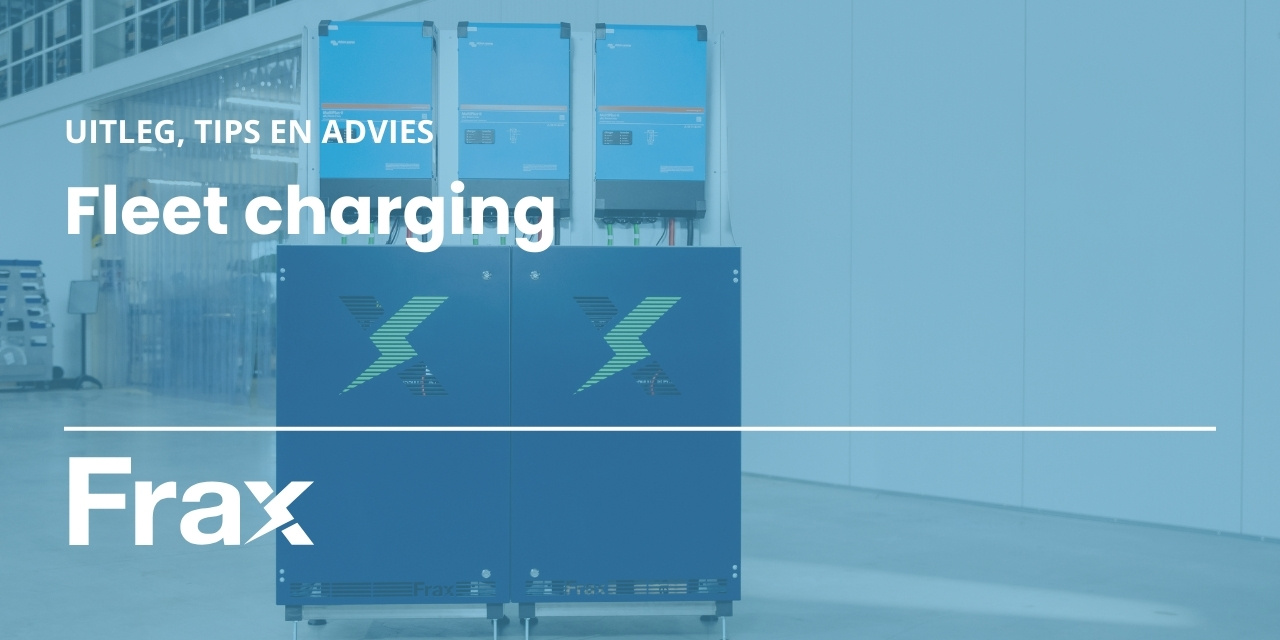
A Battery Energy Storage System, often abbreviated as BESS, is a complete solution that allows you to store electricity in batteries and make it available again later for your building or site. Such a system consists not only of batteries, but also of power electronics, safety devices, and controls.
In logistics real estate, this control is crucial because the system must continuously manage when you store and when you discharge. With a smart energy management system, the BESS can automatically optimize based on your consumption profile, energy rates, available solar generation, and the limits of your grid connection.
For installers and technical partners, it is important that a BESS is robust, can be constructed in a modular fashion, and is easy to integrate with existing installations. Consider connections to main distribution equipment, measuring equipment for grid management, building management systems, and possibly charging infrastructure. A well-chosen storage capacity and appropriate control system largely determine the efficiency and ease of installation.
Network congestion and limited connection capacity within logistics real estate
Grid congestion means that the electricity grid in an area does not have sufficient capacity to supply additional power or process additional feed-in. In logistics real estate, this manifests itself as a restriction on expansion, delays in projects, or a cap on the amount of power you are allowed to purchase.
This is a bottleneck when you want to add more docks, more automation, or extra charging points. Battery storage helps you stay within your existing contract and connection capacity by buffering energy and smoothing out peaks. This allows you to reduce grid load while still delivering the required performance.
In addition, monitoring and smart control allow you to better anticipate moments when your building requires the most power. The BESS can then temporarily step in, so you are less likely to reach the limits of your connection.
How does energy storage contribute to lower energy costs in logistics buildings?
Energy costs in logistics buildings are determined not only by total consumption, but also by when you consume and how high your peaks are. Energy storage makes it possible to shift your consumption pattern.
You can store electricity when rates are favorable or when your own solar panels generate a lot of power, and use that energy when electricity is expensive or your peak load is high. This reduces your costs and stabilizes your energy bill.
A BESS can also contribute to reducing costs associated with power demand and capacity. By smoothing out peaks, your profile becomes more predictable and you can focus more sharply on optimization.
In combination with an energy management system, this process is largely automated, so you don't have to switch manually. This helps investors and property owners to clarify the payback period and present a well-founded business case to tenants or internal stakeholders.
Common applications of battery storage in logistics real estate
In logistics real estate, energy storage is primarily about distributing power more intelligently throughout the day and making better use of local generation. The application depends on the use of the building, the installations on site, and the limitations of the grid. Below are the most common scenarios you will encounter in projects.
Peak shaving and power limitation
Peak shaving is the controlled reduction of power peaks by temporarily using energy from the BESS. In logistics buildings, peaks occur, for example, due to simultaneous charging, cooling installations, sorting systems, and production lines.
By smoothing out these peaks, you stay within the limits of your connection and limit costs associated with high peak loads. The result is a more stable energy profile and greater control over your operational capacity.
Maximizing solar energy on large roofs
Many logistics buildings have large roofs that are suitable for solar panels. During sunny periods, generation can exceed immediate consumption, while demand increases later in the day. Battery storage allows you to store that solar energy and use it when your logistics processes need it.
Support for charging infrastructure for logistics transport
Charging infrastructure for vans, trucks, and internal transport often requires a lot of power, especially when multiple vehicles are charging simultaneously. In areas with grid congestion, it is not always possible to upgrade the connection in time.
Energy storage can support charging by supplying power during peak times and by storing energy during periods of lower demand. This makes charging sessions easier to plan and keeps operations running without immediately requiring grid expansion.
Operational reliability and continuity of logistics processes
In logistics real estate, a brief interruption can have a major impact on delivery reliability, temperature control, and automated processes. A BESS can contribute to operational reliability by temporarily supporting critical parts of the installation in the event of voltage problems or brief malfunctions.
In combination with smart control, you can set priorities so that essential processes continue and you limit operational risks. This makes energy storage not only a cost measure, but also part of risk management and continuity.
When is battery storage profitable in logistics real estate?
The profitability of a battery system in logistics real estate depends on your consumption profile, the level and frequency of peaks, the presence of solar panels, and the limitations of your grid connection.
Energy rates, the desired level of monitoring, and the degree of automation in the energy management system also play a role. When these factors come together favorably, battery storage can reduce energy costs while creating room for growth within existing capacity, which has a positive impact on the payback period.
- Your location is affected by grid congestion, and upgrading the grid connection is not feasible or would take too long.
- You see high and recurring power peaks due to simultaneous processes, charging sessions, or installations in the building.
- You have solar panels and want to increase your own consumption by storing locally generated energy instead of feeding it back into the grid.
- You develop or manage charging stations and want to support charging capacity without structurally exceeding your grid capacity.
- You want to reduce energy costs while focusing on energy efficiency, sustainability, and a future-proof energy supply.
- You want certainty about critical processes and to limit the impact of short power problems or interruptions.
Technical and spatial considerations for BESS in logistics real estate
When installing a BESS in logistics real estate, proper technical and spatial integration is essential, with safety and compliance with applicable standards for industrial energy storage systems playing an important role. Among other things, you need to consider the available space inside or outside the building, access routes for installation and maintenance, and the connection to the electrical infrastructure.
Safety, ventilation, and the location of measurement and security components also play a role. From an engineering perspective, it is important to calculate the correct storage capacity, appropriate to the purpose of the system, such as peak shaving, solar optimization, or load support.
In addition, integration with existing systems is crucial for performance and ease of use. Consider connections with measuring points, monitoring for network management, and the control of consumers such as chargers or cooling technology.
Smart, well-configured control prevents unwanted switching and ensures that the system actually optimizes the selected targets. This makes the difference between a battery that only stores energy and a solution that actively contributes to cost reduction and capacity management.
Frax BESS solutions for logistics real estate
Frax supplies innovative and sustainable Battery Energy Storage Systems designed to take all the hassle out of installation. With plug-and-play solutions and a Frax energy management system that is ready for integration, you can complete projects faster and manage them more easily.
For logistics real estate, this means you can deploy a scalable, modular solution that matches the complexity of warehouses, distribution centers, and loading locations. This allows you to support customers with robust energy storage that helps reduce energy costs, manage grid congestion, and accelerate the transition to a future-proof energy supply.
This post was last updated on: